美国发布《生物经济计划:实施框架》
2019-07-30
编辑:Traveler
来源:BR&D
美国发布《生物经济计划:实施框架》
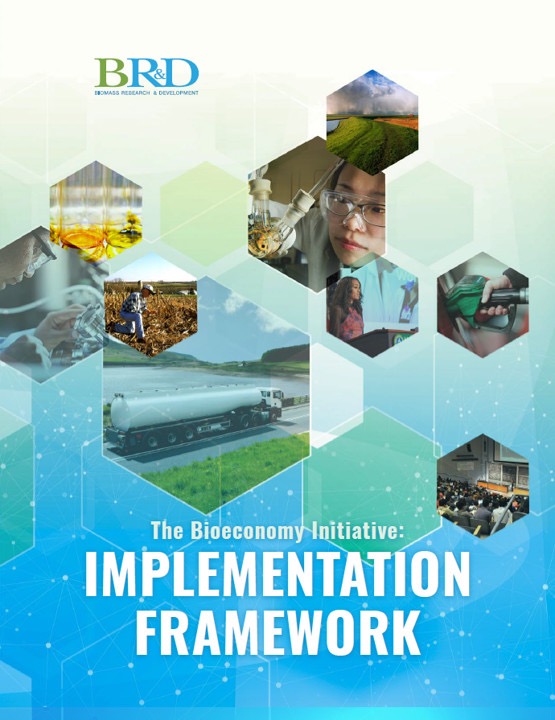
《The Bioeconomy Initiative: Implementation Framework》
《The Bioeconomy Initiative: Implementation Framework》
2019年3月5日,美国生物质研究与开发理事会(BR&D)发布《生物经济计划:实施框架》战略报告。该战略的愿景目标是:振兴美国生物经济,促进经济可持续增长、新的农业市场与就业、能源安全以及环境改善。
Federal Agencies Release Framework for Advancing the Bioeconomy
WASHINGTON, D.C., March 5, 2019 - The federal Biomass Research and Development (BR&D) Board today unveiled a multi-agency strategy to accelerate innovative technologies that harness the nation’s biomass resources for affordable biofuels, bioproducts, and biopower. The Bioeconomy Initiative: Implementation Framework was developed by the B&RD Board – an interagency collaborative which is co-chaired by the U.S. Department of Agriculture (USDA) and the U.S. Department of Energy (DOE) - to guide such efforts.
“The emerging bioeconomy presents an opportunity to expand and enable new agriculture and forest markets while also improving the sustainability of the broader modern economy and environment,” said USDA Deputy Under Secretary for Research, Education, and Economics Scott Hutchins. “Strategic federal investments are developing technologies for the bioeconomy that promise to create new possibilities for renewable product supply-chains, jobs, and economic opportunities.”
“A major benefit of the Bioeconomy Initiative is the ability to maximize the impact of federal investments in bioenergy and accelerate innovation in the bioeconomy,” said Energy Department Assistant Secretary for Energy Efficiency and Renewable Energy Daniel Simmons. “Biobased technologies can provide diverse, affordable, domestic supplies of energy and other products, providing consumers and businesses with additional reliable and secure energy options.”
The Bioeconomy Initiative: Implementation Framework outlines an approach for implementing the Initiative. The Framework will serve as a guiding document for the BR&D Board member agencies to increase government accountability and accelerate innovative and sustainable technologies that contribute to a secure, reliable, affordable, and enduring supply of U.S. energy and products.
The Implementation Framework presents goals and actions for addressing knowledge and technology gaps in:
Advanced algae systems
Feedstock genetic improvement, production, management, and logistics
Biomass conversion and carbon utilization
Transportation, distribution infrastructure, and end use
Bioeconomy analysis
Bioeconomy sustainability
The Implementation Framework lays out activities to address technology uncertainty; leverage government, academic, and industrial resources and capabilities; stimulate public-private partnerships; and generate technical information that can inform decision-makers and policymakers.
必应可搜索该报告全文(pdf版):
https://biomassboard.gov/pdfs/Bioeconomy_Initiative_Implementation_Framework_FINAL.pdf