生物经济在美国(1)
The
I. Research and Innovation(研究与创新)
The Biomass Research and Development Initiative (BRDI) is the multi-agency effort to coordinate and accelerate all Federal biobased products and bioenergy research and development.
The National Renewable Energy Laboratory (NREL) is the nation's primary laboratory for renewable energy and energy efficiency research and development (R&D). NREL's mission and strategy are focused on advancing the U.S. Department of Energy's and American nation's energy goals. The NREL has constructed a pilot facility to test bioprocessing technologies for the production of ethanol (or other fuels or chemicals) from cellulosic biomass. The pilot plant facilities are available to industry and academia to support R&D.
The NREL Biomass Program is involved with major biorefinery development projects that are focused on new technologies for integrating the production of biomass-derived fuels and other products in a single facility. The emphasis is on using new or improved processes to derive products such as ethanol and various other chemicals.
In 2003, the US Department of Energy (DoE) spent $125 million on biomass utilisation research, and the Department of Agriculture (USDA) contributed a further $259 million.
In addition, the DoE is spending nearly $100 million in support of bio-refinery demonstration projects. These will integrate the conversion of biomass into fermentable sugars and their subsequent use to produce value-added products. At the same time, the necessary logistics of collection, storage, transport etc are being studied. The
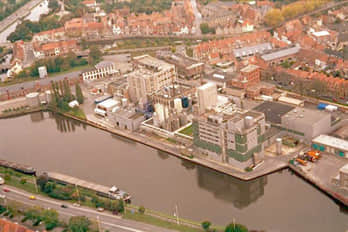
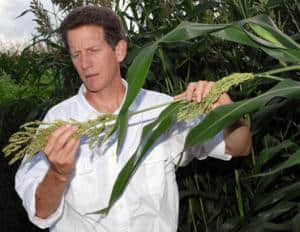
Figure1:
Figure1 Robert Anex, an Iowa State associate professor of agricultural and biosystems engineering, examines a plot of hybrid sorghum-sudangrass for high-yielding biomass.
II. Policy(研发政策)
The
Political commitment has emerged quite rapidly in the last ten years, due primarily to high-level debates about the country's increasing dependence on foreign oil. The first major policy initiative to emerge from this debate was President Clinton's Executive Order of 1999, setting a goal of tripling the use of bio-based products and energy from biomass by 2010 and establishing a permanent council to develop a detailed research programme to be presented annually as part of the Federal budget. Legislation was then introduced to create a focus on producing energy and value-added products from a wide range of agricultural and forestry residues.
Continued commitment has taken this a step further with the recent publication (2007) of a Roadmap for Biomass Technologies in the
III. Market access(市场准入与激励手段)
While the government continues to provide a high level of backing for industrial biotechnology research, it also supports market development via a range of incentives (激励). For example, the 2002 Farm Bill mandates federal procurement (政府采购) of bio-based products when they are available and are equivalent to alternatives from a fossil fuel base (the "buy bio" programme ). This is being facilitated by the setting of procurement standards and targets for federal government purchase of bio-based fuels, power and bio-products. Other standards (e.g. the renewable fuels standard ) will provide market pull, and farmers are being incentivised to grow crops for industrial use.
This effort is already paying dividends: the demand for corn-derived chemical products is predicted to grow at an annual rate of over 13% and total bio-product production is expected to reach 30 million tonnes annually by 2020.
All the signs are that this is a long-term commitment by the